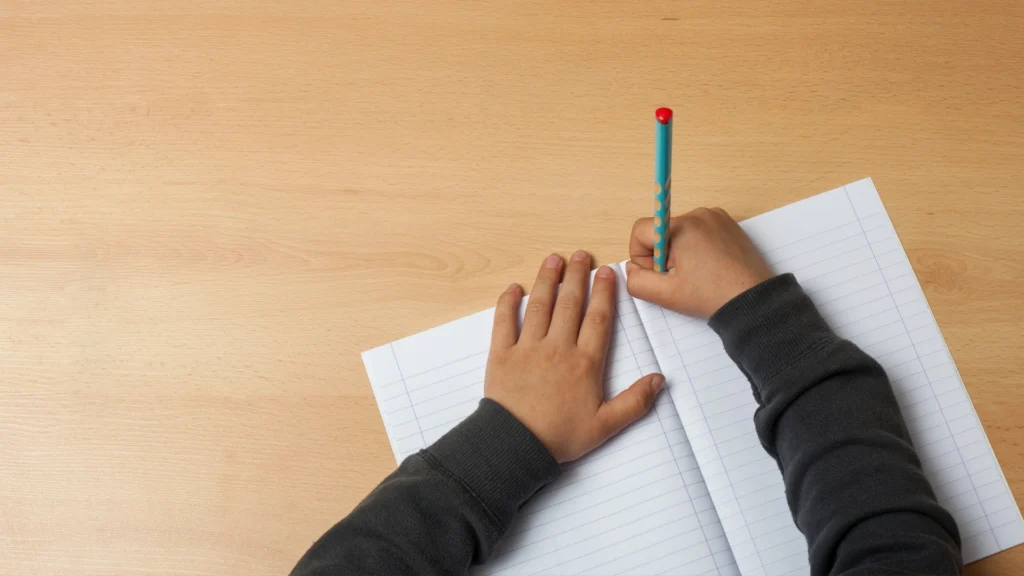
If you’ve spent any time at all on the homeschool path, you know that the moment you decide to teach writing, a small, persistent voice of doubt can creep in. Am I qualified to do this? Will my child be able to communicate effectively? Maybe you’ve started with a resource that promised to be the perfect solution, only to be met with blank stares, frustration, or a general sense of dread from everyone involved.
You are not alone.
Homeschooling is a journey built on freedom and flexibility, yet when it comes to a foundational skill like writing, many of us instinctively reach for something structured and rigid. We worry that without a perfectly laid-out plan, our children will fall behind. We cling to the idea of a comprehensive “book” or system because it feels safe.
But what if the best path forward involves trusting your child’s natural curiosity and focusing on the process, not the product? What if the most effective homeschool writing curriculum is the one that sparks joyful learning, celebrates their unique voice, and is flexible enough to grow with them?
This is not about finding the ‘perfect’ program. It’s about finding a rhythm and a set of tools that feel authentic to your family. It’s time to set aside the institutional anxiety and embrace an approach to writing that is as creative and individual as your child.
Rethinking What Writing Means in Your Home
For many of us, the word “writing” conjures up images of formal essays and red-penned corrections. We need to gently redefine this term in the context of a supportive homeschool environment. Writing is simply communication on paper. It’s a tool for sharing thoughts, telling stories, and exploring the world.
A truly successful homeschool writing curriculum is less a textbook and more a philosophy. It’s a way of inviting your child into the world of language without pressure.
The Two Core Pillars of Creative Writing at Home
When you evaluate a resource, consider if it addresses both of these areas in a way that aligns with your child’s personality:
- The Art (Voice and Idea): This is the heart of writing. It’s the original thought, the story, the opinion, the emotion. It’s the freedom to choose a topic they care about, to play with words, and to find their own way of saying something. This is where the joyful learning comes in. If a child doesn’t feel they have something worthwhile to say, no amount of structure will help them write.
- The Craft (Mechanics and Structure): This is the practical side. It includes neat handwriting, forming complete sentences, spelling, and organizing ideas so a reader can follow along. This is important, but it should support the art, not stifle it. We teach the craft so the art can be clearly understood.
Releasing the Pressure: Focus on Connection, Not Correction
The single most impactful shift you can make is changing your role from “teacher/corrector” to “audience/partner.” When your child shares their writing, what they really want is connection and validation. They are giving you a piece of their mind and heart.
The old-school approach of marking every spelling mistake and dangling modifier on a rough draft is a creativity killer. It teaches your child that writing is a process of being wrong. Instead, try this:
Tips for Supportive Feedback and Editing
- Be the Enthusiastic Audience First: Read the piece aloud or have your child read it to you. Focus only on the message. Say things like, “Wow, I didn’t know your main character was so brave!” or “That description of the stormy sea made me shiver.” This reinforces the Art.
- Decide on a “Focus Skill”: For a rough draft, pick one thing to work on. Just one. Is it making sure every sentence starts with a capital letter? Is it adding more detail? Is it using stronger verbs? If you see a dozen errors, choose the most important one, circle it, and ignore the rest for now.
- Use the “Happy Hour” Principle: Once a week, commit to a “writing happy hour” where you write alongside your child. You work on your grocery list or a letter to a friend; they work on their project. This models the habit without making them the center of scrutiny.
- Employ Narration and Copywork: For younger children, let them tell you their story and you write it down. This separates the effort of thinking from the effort of handwriting. For all ages, copywork (neatly writing out a great piece of literature, a poem, or even song lyrics) naturally trains their brain in sentence structure and punctuation without formal lessons.
Finding Your Flexible Framework: Evaluating Homeschool Writing Curriculum
When you search for a primary homeschool writing curriculum, you’re really looking for a helpful tool, not a mandatory master. The goal is to find a system that makes your life easier and your child’s learning more engaging.
Instead of asking, “Is this curriculum ‘good’?” ask, “Is this curriculum a good fit for us?”
Questions to Ask Before Committing to a Program
- What is the Time Commitment?
- What does a typical day look like? Are the lessons designed to be short and focused (15-30 minutes), or do they require long, sustained writing blocks? For a family that prefers to spend their mornings exploring outdoors, a curriculum with shorter, flexible assignments will be a better fit. You can find more ideas for structuring your time, whether you are planning a full year or just your daily flow, in our article on Finding Your Flow: Homeschool Time Management for Happier Days.
- How Does it Address the Two Pillars (Art and Craft)?
- Is the focus on inspiring ideas and voice first, with mechanics taught within the context of their own writing? (This aligns well with joyful learning.)
- Or, is the focus on mastering rules and structure first, before they get to choose a topic? (This is better for children who thrive on clear boundaries and step-by-step instruction.)
- How Involved Do I Need to Be?
- Does it include video instruction your child can use independently? This is great for busy parents.
- Is the resource “parent-led” with scripts and lessons you need to teach? This is better if you prefer to be highly involved in the instruction.
- Does it Encourage Creative Outlets?
- Look for programs that weave in other homeschool activities, like creating comic strips, writing dialogue for puppet shows, or drafting recipes. Writing isn’t just for book reports.
For a family that values freedom and inspiration, programs that focus on finding your child’s natural “writing voice” might be a great place to start exploring. If you want to jump straight into inspiration, you may want to check out some of our ideas for Creative Writing for Homeschoolers: Sparking Imagination and Fun.
Bringing Writing into the Everyday Flow
The great secret of a successful homeschool writing curriculum is that it’s often invisible. It’s woven into the fabric of your day. Every time your child uses written language for a real purpose, they are practicing their skills.
Here are simple, low-stress homeschool activities that build strong communication skills naturally:
Practical Writing Integrations
- Family Communication: Have your older children write the grocery list, or the younger ones dictate it to them. Let them write letters to grandparents, neighbors, or pen pals. Write notes to each other and leave them in unexpected places.
- Documentation and Memory: Use journaling, scrapbooking, or creating “all about me” pages. When you finish a read-aloud book, have your child create a simple character map or summary page for a family binder.
- Expert Writing: If your child loves an obscure topic (dinosaurs, ancient Egypt, local birds), encourage them to create a mini-book or a presentation poster on the subject. They are writing to teach something they already love.
- Outdoor Observations: Bring a notebook outside. Writing a descriptive paragraph about the sound of the creek or the texture of tree bark is a fun way to practice powerful adjectives and imagery. This connects beautifully with our ideas in The Great Outdoors: Your Ultimate Classroom for Homeschool Learning.
The Power of Gentle Grammar
Avoid drilling grammar rules in isolation. Instead, use their own writing as the textbook. When you see a missing comma, simply point to that sentence and ask, “Where would you put a pause if you were reading this out loud?”
Consider resources that focus on dictation and copywork, which are low-pressure ways to absorb the correct patterns of language. A great resource for parents seeking to deepen their understanding of child-led, flexible approaches to language arts is The Writer’s Jungle by Julie Bogart, a text that champions an encouraging, voice-first philosophy to writing instruction, available through the Brave Writer website.
Final Encouragement: Trust the Process
Choosing a homeschool writing curriculum is ultimately an act of trust. Trust in your child’s inherent ability to learn and communicate, and trust in your ability to be their guide. It is perfectly okay to sample different materials, ditch what isn’t working, and cobble together a collection of resources that feels right. The freedom to adjust is one of the greatest gifts of homeschooling.
Your goal is not to produce a flawless writer right now, but to nurture a child who is confident, who loves to learn, and who knows their voice matters. If you can do that, the mechanics will follow.
Ready to find supportive tools that empower your unique homeschool journey?
Click here to explore the resources at learninghub.com/ and start crafting a joyful learning path for your family.
References
Bogart, J. (n.d.). The Writer’s Jungle. Retrieved from https://www.bravewriter.com/shop-curriculum/manuals/writers-jungle
Homeschool.com. (n.d.). Homeschool Writing Curriculum Reviews. Retrieved from https://www.homeschool.com/blog/homeschool-writing-curriculum-reviews/
Homeschooling with Dyslexia. (n.d.). Homeschool Writing Curriculum: Finding the Best Fit. Retrieved from https://homeschoolingwithdyslexia.com/homeschool-writing-curriculum-finding-best-fit/


