
There is a certain kind of magic that happens when we step outside with our children. The air feels lighter, the walls disappear, and suddenly, the whole world becomes an invitation to explore. For many of us who have walked away from the structured seating and bright fluorescent lights of traditional schooling, the outdoors represents the ultimate freedom. Yet, even in that freedom, we sometimes wonder if we are doing enough. We worry about whether our children are picking up the skills they need while they are busy climbing trees or splashing in puddles.
If you have ever felt that little tug of uncertainty, please know you are in good company. Transitioning to a life where learning happens naturally can feel like unlearning everything we thought we knew about education. The beautiful truth is that your backyard, the local park, or a nearby trail are the most sophisticated laboratories on earth. By leaning into nature-based STEM projects, you are not just checking a box. You are nurturing a sense of wonder that no textbook can replicate. Integrating hands-on science activities into your daily rhythm allows your children to lead the way, asking questions and finding answers through the simple act of play.
What are Nature Based STEM Projects?
When we talk about STEM in a homeschool setting, it is helpful to strip away the intimidating layers. STEM simply stands for Science, Technology, Engineering, and Math. In the context of our daily lives, nature-based STEM projects are any activities that use the natural world to explore these concepts. It is not about complicated kits or expensive software.
Instead, it is about observing how a spider weaves a web (engineering), counting the petals on a wildflower (math), noticing how a puddle evaporates in the sun (science), or using a simple magnifying glass to see the veins in a leaf (technology). These homeschool activities are less about finding the “right” answer and more about the process of discovery. It is child-led, curiosity driven, and deeply rooted in the environment around us.
Starting Small with Backyard Observations
The best way to begin is right outside your door. You do not need a national park to find science. A small patch of grass or a sidewalk crack can host an entire ecosystem. When we slow down and look closely, we show our children that science is not a distant subject but a living part of their world.
- The Micro-Hike: Give your child a piece of string about three feet long. Have them lay it in a circle on the ground and see how many different things they can find within that small space. They might find three types of ants, two different mosses, and a tiny pebble that looks like quartz.
- Shadow Tracking: On a sunny day, place a stick in the ground and mark where the shadow falls every hour. This is a simple way to discuss the rotation of the earth and the passage of time without ever opening a book.
- Weather Watching: Keep a simple jar outside to catch rain or use a ribbon tied to a branch to see which way the wind blows. These hands-on science activities help children connect with the rhythms of the seasons.
Validation is important here. You might feel like you are “just playing,” but these moments are building a foundation of scientific inquiry. You are helping them become observers. For families looking to weave these moments into a more structured but still flexible flow, LearningHub.com offers resources to help you bridge the gap between outdoor play and intentional discovery.
Engineering in the Wild
Engineering sounds like a heavy word, but for a child, it is simply the act of building and solving problems. When children build forts or bridges across small streams, they are engaging in complex structural engineering.
- Stick Bridges: If you find a small ditch or a stream, challenge your children to build a bridge that can hold the weight of a heavy rock. They will have to experiment with different lengths of wood and see how weight is distributed.
- Nest Building: Look at a bird nest and then try to build one using only what you find on the ground. It is much harder than it looks. This activity builds appreciation for animal architecture and fine motor skills.
- Dam Construction: Using mud, stones, and sticks to divert a small trickle of water is a classic childhood pastime that teaches fluid dynamics and environmental impact.
These types of nature-based STEM projects allow children to fail and try again in a low-pressure environment. There are no grades or “wrong” ways to build a stick fort. There is only trial and error of the real world. If you want to encourage more of this creative spirit, you might enjoy exploring creative writing for homeschoolers to help them narrate the adventures they have while building.
Math in the Garden and Forest
Math is often the subject that causes the most stress for parents transitioning away from traditional school. However, nature is full of patterns, symmetry, and logic. When we take math outside, the abstract numbers become tangible objects.
- Symmetry Hunts: Search for leaves or butterflies and look for how one side matches the other. This is a perfect introduction to geometry.
- The Fibonacci Sequence: Older children can look for the “golden ratio” in pinecones, sunflowers, or the shells of snails. Seeing math in the spiral of a shell makes it feel like a secret language of the universe.
- Natural Sorting: Collect various stones, leaves, and nuts. Ask your child to sort them by size, weight, texture, or color. This develops the classification skills necessary for advanced biology later on.
Using nature as a math manipulative is a wonderful way to keep learning fresh. For more ideas on keeping the spark alive, check out these 10 homeschool activities to keep learning fresh and fun.
The Science of Growing Things
Gardening is perhaps the most comprehensive of all nature-based STEM projects. It involves biology, chemistry, and even meteorology. Whether you have a large backyard plot or a few pots on a balcony, growing something from a seed is a powerful lesson in patience and the cycle of life.
- Seed Dissection: Before planting, soak a large bean seed in water and let your child peel it open to see the tiny plant waiting inside.
- Soil Testing: Talk about what plants need to grow. You can experiment by planting seeds in different types of soil, like sand versus rich compost, to see which grows better.
- Pollinator Observation: Spend time watching which insects visit which flowers. This is a great way to learn about the interdependence of species.
If you are looking for a deeper dive into biological concepts through your garden, LearningHub.com can provide supplementary information that aligns with your child’s natural interests. For example, you might find a playlist about plant cells to watch after a morning of weeding.
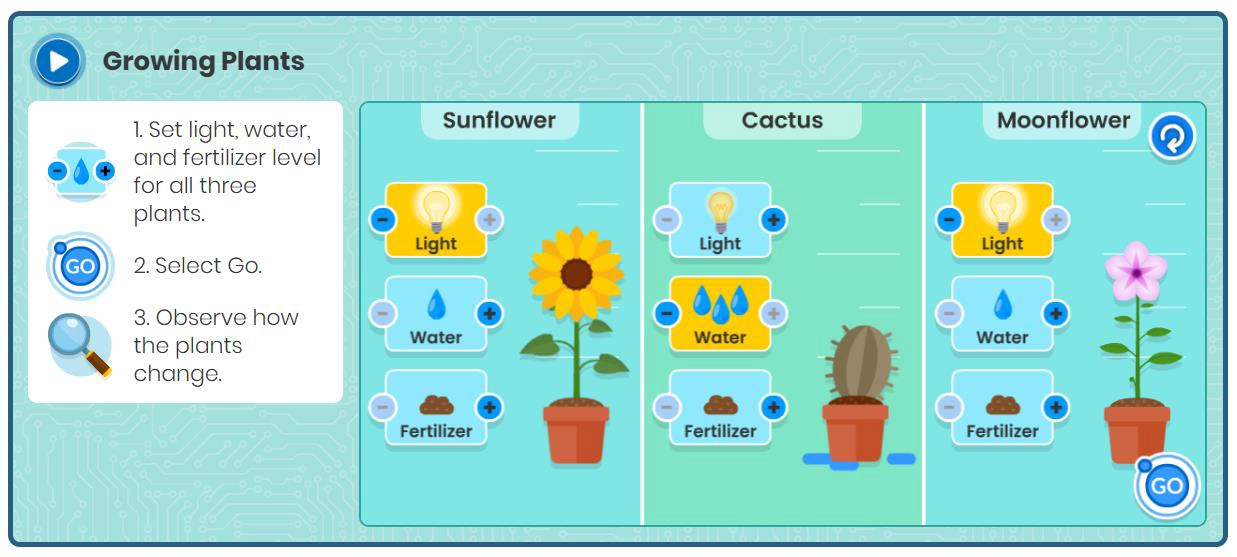
Sometimes the weather doesn’t cooperate or you need a little more detail than a backyard can provide; for those days, Learning Hub has interactive labs when you need extra practice or can’t get outside. These labs allow your children to experiment in a digital space that mirrors the discoveries they make in the dirt.
Embracing the Mess and the Slow Pace
One of the biggest hurdles for parents is the mess. Nature is dirty. There will be mud in the house and jars of pond water on the counter. It is okay to feel a little overwhelmed by the chaos of a lived in, learned in home. Reframe the mess as evidence of a rich, active childhood.
When we step away from the rigid schedule of a school day, we gain the gift of time. If a child becomes fascinated by a line of ants, we do not have to tell them to stop because “science time” is over. We can let them stay there for an hour. This slow pace is where deep connection happens. If you are struggling to find your rhythm in this new lifestyle, reading about finding your flow and crafting a flexible homeschool schedule can offer some much needed reassurance.
Finding Community in the Outdoors
Homeschooling does not have to be a solitary journey. Many families find that their best homeschool activities happen when they are with others. Outdoor co-ops or nature groups allow children to collaborate on larger projects, like building a community garden or a large-scale fort.
Collaborative nature-based STEM projects teach social skills, negotiation, and teamwork in a way that feels organic. When children work together to move a heavy log or identify a strange fungus, they are learning how to be part of a community. You can learn more about the benefits of homeschool co-ops and how they can support your family’s social and educational needs.
Why Hands-On Science Matters
Research often supports what we intuitively know as parents: children learn best when they are active participants. According to the National Reading Panel, multi-sensory approaches help with various types of understanding and retention. While that report focuses on reading, the same principle applies to science. When a child feels the texture of bark or smells the damp earth after a rain, those sensory inputs create stronger neural pathways than a picture in a book ever could.
Furthermore, outdoor play is essential for emotional health. The 1000 Hours Outside movement emphasizes that matching screen time with green time can lead to better sleep, improved focus, and a more peaceful home environment. Science is not just about facts. It is about well-being.
Simple Ideas for Every Age
You do not have to wait for your child to be a certain age to start these projects. Hands-on science activities are scalable and can be enjoyed by everyone from toddlers to teens.
For the Littles (Ages 3 to 6)
- Mud Kitchens: Mixing soil and water to see how consistency changes is early chemistry.
- Color Matching: Take a box of crayons outside and try to find something in nature that matches every color.
For the Middles (Ages 7 to 11)
- Leaf Chromatography: Use rubbing alcohol and coffee filters to see the hidden colors in green leaves. This is a fantastic autumn project.
- Bird Identification: Use a field guide to identify local birds and learn about their different beak shapes and what they eat.
For the Bigs (Ages 12 and up)
- Water Quality Testing: Use a simple kit to test the pH and oxygen levels of a local pond or stream.
- Citizen Science: Participate in programs like the Great Backyard Bird Count or iNaturalist to contribute real data to scientific research.
No matter the age, the goal remains the same: fostering a lifelong love of discovery. For more ways to document these discoveries, you might consider homeschool journaling as a way for your children to record their findings in their own words and drawings.
Supporting Your Journey with Learning Hub
As you transition into this life of freedom and outdoor exploration, remember that you do not have to do it alone. LearningHub.com is designed to be a supportive partner in your homeschooling journey. We understand that you want high quality resources that respect your child’s autonomy and your family’s unique rhythm.
The platform is completely free and offers a wealth of tools to help you bring science to life. Whether you need a quick video to explain why the sky is blue after a long afternoon of staring at clouds, or you want a curated playlist of hands-on science activities for a rainy day, we are here to help.
Trusting the Process
It takes time to trust that “just playing” is enough. We have been conditioned to think that if there is no worksheet, there is no learning. But when you watch your child spend an hour trying to figure out how to keep a ladybug in a jar or how to balance stones on top of one another, you are witnessing the birth of a scientist.
These nature-based STEM projects are not chores to be completed. They are invitations to wonder. They are the moments that build confidence, curiosity, and a deep, lasting connection with the world. You are doing a wonderful job providing these experiences for your children. Every muddy footprint and every pocket full of acorns is a testament to the beautiful, wild education you are creating together.
If you ever feel lost or need a bit of inspiration, look to your child. They are natural explorers. They already know how to do this. Your job is simply to open the door and walk out with them.
Want to help your child explore the wonders of the world at their own pace? At LearningHub.com, we offer thousands of flexible lessons, nature-based STEM playlists, and supportive tools to help you foster a love of science and discovery. Create your free account today and start building a homeschool experience that feels like a natural extension of your family’s curiosity.
References
1000 Hours Outside. (n.d.). Match Screen Time with Green Time. Retrieved from https://www.1000hoursoutside.com/
HowToHomeschool. (2025). Science Homeschool Curriculum Buyer’s Guide. Retrieved from https://www.howtohomeschool.com/homeschool-guides/stem-science-homeschool-curriculum-buyers-guide-2025
National Reading Panel. (2000). Teaching children to read. Retrieved from https://www.readingrockets.org/resources/resource-library/report-national-reading-panel-teaching-children-read
BirdCount.org. (n.d.). Great Backyard Bird Count. Retrieved from https://www.birdcount.org/
iNaturalist. (n.d.). A Community for Naturalists. Retrieved from https://www.inaturalist.org/

