
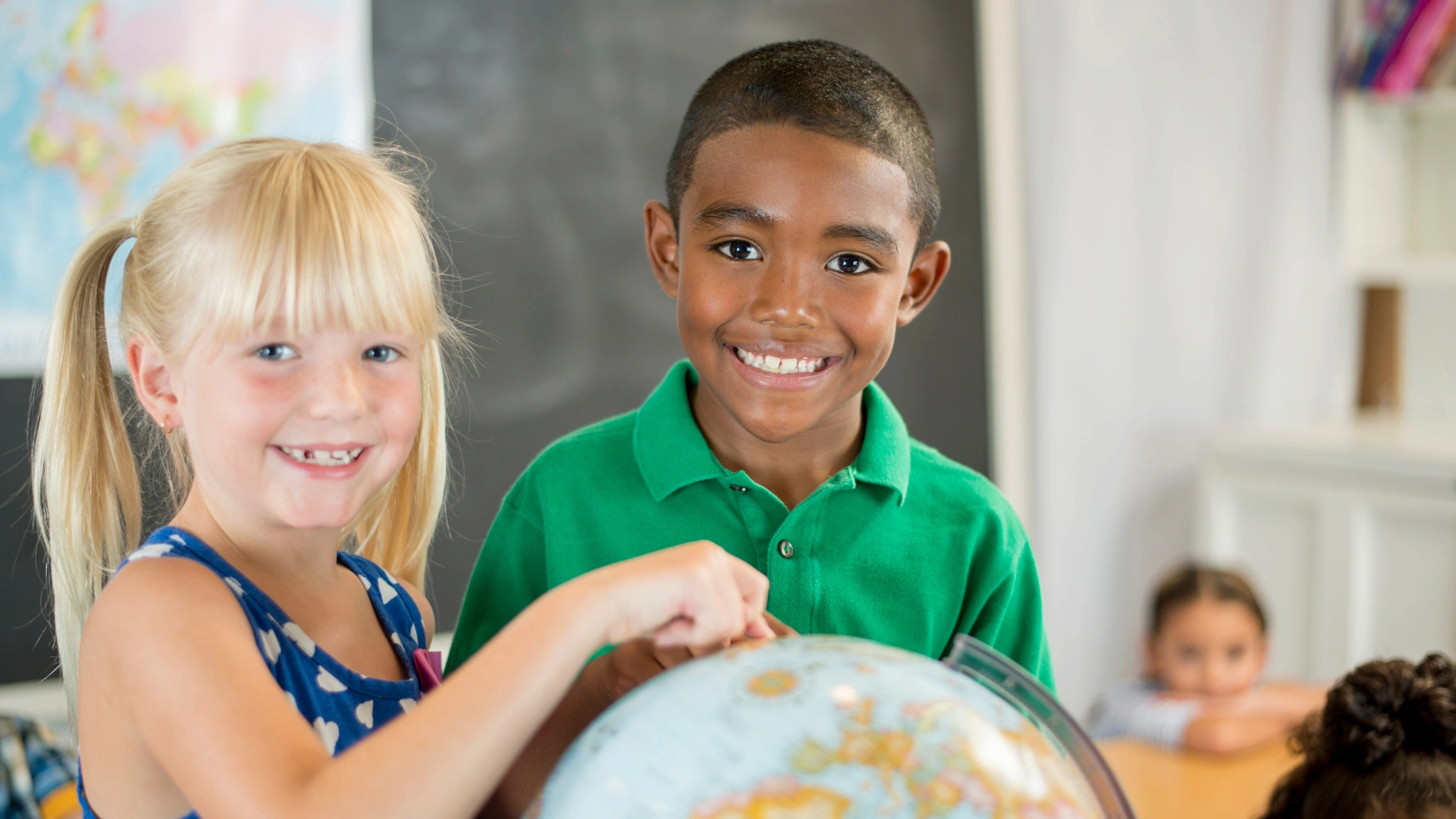
Geography often gets a bad reputation in our own memories of school. You might remember frantically memorizing state capitals the night before a quiz or staring blankly at outlines of continents that felt completely disconnected from your real life. When we decide to take charge of our children’s education, it is natural to worry that we need to replicate that same structure. You might feel pressure to buy a heavy textbook or ensure your child can identify every river in South America by a certain age.
Take a deep breath and let those old fears go. In a home environment, homeschool geography becomes something entirely different. It transforms from a list of facts into a vibrant invitation to explore. It is the story of where we are, where we have been, and the beautiful diversity of the people who share this planet with us. You do not need a degree in social studies to spark a love for the world in your children. You simply need curiosity and a willingness to explore alongside them.
This guide is here to help you see geography through a fresh lens. We will look at how to weave map skills and cultural exploration into your daily rhythm naturally. We will move away from rigid memorization and toward meaningful connection. Whether you are identifying trees in your backyard or cooking a meal from halfway across the globe, you are teaching geography. Let’s look at how to make this journey joyful and stress free.
Redefining Geography for the Home Learner
Before we dive into practical activities, it helps to pause and rethink what we actually mean when we talk about geography. In a traditional setting, geography is often separated into “physical” (landforms, weather) and “political” (borders, capitals). While those things are real, they are often taught in a vacuum.
In your home, geography is the context for everything else. It is the stage where history happens. It is the source of the ingredients in your pantry. It is the weather that decides whether you wear a raincoat or shorts today.
What is “Living Geography”?
Think of living geography as learning about the world through direct experience and storytelling rather than dry facts. It focuses on relationships. How do people interact with the land? How does the climate shape the food people eat? When you approach the subject this way, it naturally interests children because it answers the question “Why does this matter to me?”
This approach removes the pressure to cover every single country or memorize every flag. Instead, you focus on deep dives into places that spark interest. If your child loves penguins, you explore Antarctica. If they are fascinated by samurai, you explore Japan. This child, led approach ensures that the information actually sticks because it is attached to something they care about.
Takeaway: Geography is not just about where places are located. It is about understanding the people, cultures, and environments that make our world unique.
Building Map Skills Through Play and Real Life
When we think of map skills, we often picture worksheets with compass roses and grid coordinates. While those have their place, spatial awareness is best learned through movement and real, world application. Children need to understand their immediate surroundings before they can conceptually grasp a map of the entire world.
Start with Your Own Backyard
For younger children, the concept of a “bird’s eye view” can be tricky. Start by mapping something familiar. You might map your living room or your backyard.
- The Bedroom Map: Have your child draw their bed, dresser, and door. Walk around the room and touch the objects, then point to them on the paper. This bridges the gap between the 3D world and a 2D representation.
- The Treasure Hunt: This is a favorite for many families. Hide a small treat or a favorite toy somewhere in the house or yard. Sketch a simple map with a visible “X” marking the spot. As your children get older, you can add more complex instructions, like “take ten paces north from the big oak tree.”
Navigate Your Community
As your children grow, expand your mapping to the neighborhood.
- The Neighborhood Walk: Print out a simple street map of your area (you can find these online). Put it on a clipboard and take a walk. Have your child mark where the stop signs, fire hydrants, or interesting gardens are.
- Passenger Navigators: If you are driving to a familiar location, like the library or a friend’s house, hand the phone or a paper map to your child in the backseat. Ask them to tell you when a turn is coming up. It empowers them and builds practical directional skills.
Connecting to the Bigger Picture
Maps are also incredible tools for tracking your family’s journey.
- The Wall Map: Hang a large map of the world or your country in a central hallway or the dining room. It doesn’t need to be used for a formal lesson. Just having it visible invites questions.
- Marking Memories: Use pins or stickers to mark places you have visited, places where relatives live, or places you read about in books. If you are reading a story set in Paris, take a moment to find France on the map. This simple habit connects abstract locations to the stories and people your children already love.
Note: Do not worry if your child confuses North and South or struggles with scale initially. These concepts take time to develop. The goal is familiarity and comfort with maps as tools, not perfection.
World Geography for Kids: A Feast for the Senses
One of the most delightful ways to explore world geography for kids is through their senses. Textbooks can describe a spice market in India or a festival in Brazil, but they cannot let you smell the curry or hear the samba drums. Home education gives you the freedom to bring these cultures into your kitchen and living room.
Taste the World
Food is a universal language. It is one of the most accessible entry points into a new culture.
- The Weekly Global Meal: Choose one night a week or month to be “International Night.” Pick a country together. Research a simple recipe that is authentic to that region.
- The Process Matters: Involve your children in the whole process. Go to the grocery store to find ingredients. If you can’t find exactly what you need, look up why. Does that fruit not grow in your climate? As you cook, play music from that country.
- Discuss the “Why”: While you eat, talk about the food. Why do island nations eat so much fish? Why do countries with hot climates often use spicy peppers? This connects the food back to the land and the climate.
Listen and Create
Music and art are windows into the soul of a culture.
- Folk Tales and Stories: Read picture books or chapter books set in different countries. Stories help children develop empathy for people who live differently than they do.
- Global Playlists: Create playlists of traditional and modern music from different regions. Listen to Celtic fiddle music while drawing lush green landscapes, or listen to West African drumming while learning about the savanna.
- Traditional Crafts: instead of generic crafts, try art forms that are specific to a region. Try origami when learning about Japan or paper cutting when exploring Mexico.
Relatable Scenario: The “Travel” Day
Imagine a rainy Tuesday where everyone is feeling a bit stir, crazy. You decide to “go” to Italy. You pull up a video tour of Venice on the computer. You put on some Italian opera in the background. For lunch, you make homemade pizza, talking about how dough is made from wheat. You look at photos of the Colosseum. By the end of the day, your children have absorbed the vibe of Italy far better than they would have by filling out a worksheet on Italian exports.
Finding the Right Geography Curriculum for Kids
Choosing resources can be overwhelming because there are so many options. When looking for geography curriculum for kids, remember that you do not need a comprehensive program that covers everything from A to Z. In a home environment, you have the flexibility to curate resources that match your family’s style.
Focus on Flexibility
Avoid rigid programs that dictate exactly what you must do on Day 1 versus Day 100. Look for resources that offer a buffet of ideas. You want tools that support your exploration, not masters that drive your schedule.
- Literature, Based Packs: Many homeschooling families love “unit studies” based on books. You read a great adventure story, and the curriculum provides map work, cultural notes, and recipes related to the book.
- Subscription Boxes: There are wonderful subscription services that send a box focused on a specific country each month. These often include souvenirs, snacks, and booklets. This can be a great way to put geography on “autopilot” one day a month.
Using Technology Wisely
Digital tools can be a game changer for geography.
- Virtual Field Trips: You can visit the Great Wall of China or the depths of the ocean from your laptop.
- Interactive Apps: There are many puzzle apps where children drag and drop countries into place. These are great for quiet time and help build shape recognition and location memory without feeling like drilling.
Connecting with Others
Learning happens best in community.
- Postcard Exchanges: Connect with other homeschooling families in different states or countries. Sending and receiving postcards is thrilling for kids. It gives them a tangible connection to a dot on the map.
- Co-op Days: If you are part of a local group, host a “Culture Fair.” Each family picks a country and sets up a table with food, facts, and a flag. Kids can “travel” from table to table with a passport they made.
For families looking for supportive, structured yet flexible resources, LearningHub.com is an excellent companion. Our platform offers interactive activities that can serve as a spine for your studies or a fun supplement. You might find a playlist on ocean currents that pairs perfectly with your beach trip, or a virtual tour of ancient ruins to go alongside your history reading.
Takeaway: The “best” curriculum is the one that gets done. If a program is too complicated or boring, it will sit on the shelf. Choose resources that excite you as the parent, because your enthusiasm is contagious.
The Outdoors as Your Geography Classroom
Geography is physically all around us. It is the soil, the hills, the rivers, and the weather. You can teach deep geographical concepts simply by stepping outside.
Observe the Weather
Weather is a huge part of geography.
- Tracking Charts: Keep a simple calendar where you draw a sun, cloud, or rain drop each day. Over time, you can look back and see the patterns of your local climate.
- Cloud Watching: Lie on the grass and look up. Identifying cumulus or stratus clouds is earth science, but it’s also geography. Discuss how wind moves weather systems across the country.
Land and Water
Go to a local park, creek, or beach.
- Water Flow: Watch how water moves in a stream. Toss a stick in and race it. Discuss where that water goes. Does it flow into a bigger river? Does it eventually reach the ocean? This connects your local spot to the global water cycle.
- Topography: If you hike up a hill, talk about how the view changes. Point out valleys or ridges. Using the correct terms like “plateau” or “peninsula” when you see them in real life helps children understand them much better than a diagram in a book.
For more inspiration on using nature as a learning tool, check out our article on The Great Outdoors: Your Ultimate Classroom for Homeschool Learning. It is full of ideas for taking your lessons into the fresh air.
Cultivating Wonder and Curiosity
Ultimately, the goal of homeschool geography is to raise children who are curious about the world and respectful of its inhabitants. It is about fostering a sense of wonder.
Follow the Rabbit Trails
If your child asks a question you don’t know the answer to, do not panic. Say, “I don’t know, let’s find out.”
- If they ask why it is night in Australia when it is day here, get a flashlight and a globe and act it out.
- If they ask why people in the desert wear long robes, research the cooling properties of fabric together.
Encouraging Questions
Create an environment where questions are celebrated. You do not need to be the expert who lectures. You are the lead explorer. This shifts the dynamic from “teacher vs. student” to “partners in discovery.”
Leslie Martino writes beautifully about this philosophy in her piece on Where Wonder Begins: Embracing Curiosity in Your Homeschool. She highlights how nurturing that spark of interest is often more valuable than covering a set amount of material.
Integrating with History
Geography and history are inseparable. You cannot understand the history of a war without understanding the terrain where it was fought. You cannot understand trade routes without knowing about rivers and oceans. When you study history, keep your map handy.
If you are looking for ways to blend these subjects, read our guide on Engaging History Lessons: Homeschool Social Studies Curriculum That Works. It offers practical tips for weaving timeline and map work together.
Including Cultural Traditions
One of the most heartwarming aspects of geography is understanding the “human” side, how people celebrate, mourn, and gather.
- Holiday Explorations: When a major holiday approaches, look up how it is celebrated in other nations. How is Christmas in Germany different from Christmas in Mexico?
- Festivals: Many towns have cultural festivals (Greek festivals, Lunar New Year parades). attending these is a fantastic field trip.
We have a lovely article on Integrating Holiday Traditions into Your Homeschool Lessons that can help you find meaningful ways to bring global celebrations into your home.
Conclusion
Teaching geography at home does not have to be about memorizing exports or tracing borders until your hand cramps. It is a journey that you and your children take together. It is about baking bread, climbing hills, reading stories, and tracing the lines on a map that connect us to the rest of humanity.
By focusing on connection, curiosity, and real, world experiences, you are giving your children a gift far greater than a grade. You are giving them the world. You are showing them that they are citizens of a vast, beautiful, and interesting planet.
So, unroll that map. Spin the globe. Cook something new. The world is waiting for you in your living room.
Ready to explore further?
Join LearningHub.com for free and access thousands of interactive K–12 lessons, hands, on playlists, and personalized tools to help you build a rich, curiosity, filled homeschool experience your kids will love. There is no subscription required, just a supportive resources to help you on your journey.
References
Homeschool Mastery Academy. (n.d.). Homeschool Curriculum, Resources & Encouragement. Retrieved from https://homeschoolmasteryacademy.com/
Martino, L. (n.d.). Where Wonder Begins: Embracing Curiosity in Your Homeschool. Retrieved from https://lesliemartino.com/where-wonder-begins-embracing-curiosity-in-your-homeschool/

