
We have all been there. You are sitting at the kitchen table with a pencil in one hand and a cup of lukewarm coffee in the other. Your child is staring blankly at a worksheet filled with circles and shaded wedges. The tension is rising. You are trying to explain for the third time why one half is bigger than one third. They are just not seeing it. Moments like these can make you feel like you need a completely different homeschool math curriculum or a degree in education just to get through the morning.
Many parents begin their homeschooling journey attempting to replicate a traditional classroom in their dining room. We buy the heavy textbooks, we set up the daily schedule, and we push through the tears when the math concepts just are not clicking. But the beauty of learning at home is that we have the ultimate freedom to pivot. If your current homeschool math curriculum is causing daily friction it is time to give yourselves permission to step away from the table.
At LearningHub.com, we believe that you do not need a new textbook or a rigid lesson plan to help your child understand numbers. You just need to close the workbook and open the pantry. Some of the most profound learning happens when we step away from the table and engage our hands and senses.
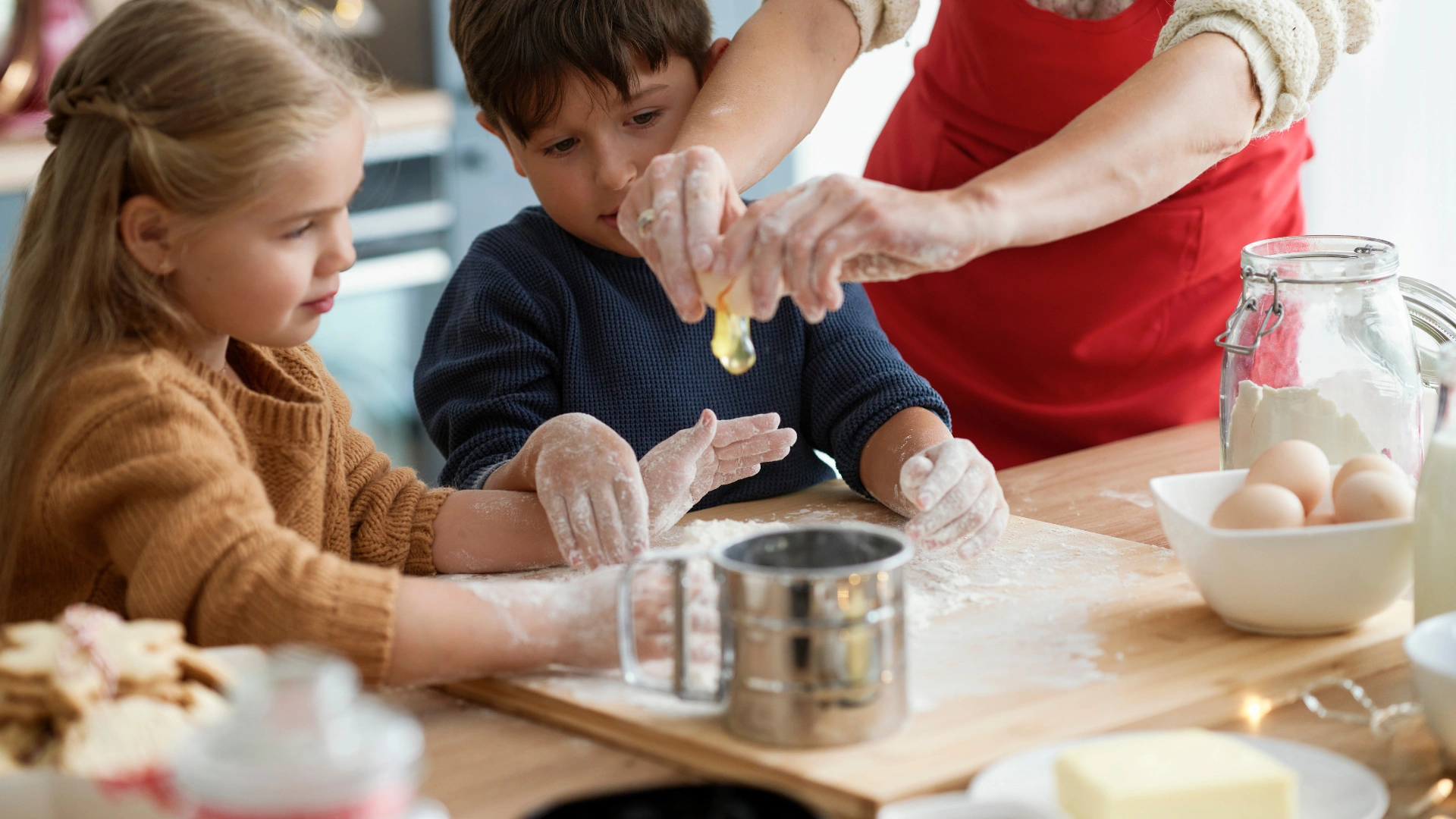
When you invite your child to bake a batch of cookies or a loaf of bread you are doing more than making a snack. You are inviting them into a real world laboratory where math has a beautiful purpose. This approach to your homeschool math curriculum does not rely on rote memorization or dry drills. It relies on the delicious motivation of eating what you create. By moving math into the kitchen you transform abstract concepts into tangible reality. You are not just teaching fractions. You are building memories and life skills that will stick far longer than any formal lesson.
Why the Kitchen Beats the Workbook
Many of us grew up believing that math only happens when we are quiet and seated. We think of math as a series of problems to be solved on lined paper. This mindset can be hard to shake when we start our journey as educators at home. We worry that if we are not following a strict homeschool math curriculum our children will fall behind. But real learning is often messy and loud and beautifully active.
The sensory experience of baking changes how the brain processes information. Your child feels the weight of the flour. They smell the sweet vanilla extract. They see the volume of milk in the glass jug. These physical inputs create multiple pathways for information to take root. A fraction on a page is just a symbol. A half cup of sugar is a physical object they can hold and pour. When a child sees that mismeasuring flour leads to a hard cookie they understand accuracy in a way a red pen mark can never teach.
Our platform at LearningHub.com is designed to support this exact shift in perspective. We know that families thrive when they follow curiosity. We offer interest based playlists that can turn a simple baking session into a deep dive into ratios or kitchen science. This allows you to follow your child where their focus naturally leads while knowing they are getting the substance they need to grow.
If you are looking for more ways to bring excitement into your daily rhythm you can check out this guide on 10 homeschool activities to keep learning fresh and fun. It is a fantastic read that explores how stepping away from the desk can revitalize your entire homeschooling experience and bring the light back to your child’s eyes.
Setting the Stage for Kitchen Math
Before you start measuring ingredients take a moment to set up your environment. You do not need a gourmet kitchen or expensive tools. You just need a clear counter and a willing spirit. Think of this space as your new interactive math center.
Gather your tools. Measuring cups and spoons are the stars of the show here. Try to find a set that has separate scoops for one cup, one half cup, one third cup, and one quarter cup. Nesting cups are fantastic visual aids. You can physically show how the smaller cups fit inside the larger ones.
This is a direct physical representation of how fractions are parts of a whole and serves as an incredible physical supplement to any homeschool math curriculum.
Invite your child to help you get everything ready. This process is often called mise en place in the culinary world. It teaches organization and logical sequencing. As you pull out ingredients talk about what you are doing. While we are primarily focused on enhancing your homeschool math curriculum it is worth noting that baking is also an incredible reading lesson. Technical reading requires intense attention to detail and order of operations. Have your child read the recipe steps out loud. Ask them what needs to happen first and what tools are required. Phrases like “cream the butter and sugar” imply a very specific physical action. Discussing these culinary terms expands their working vocabulary in a highly practical way.
For parents who worry about how to track this kind of experiential learning without relying on traditional tests you might find immense reassurance in our article on simple ways to measure academic progress in your homeschool. It offers wonderful perspective on valuing natural growth over rigid metrics.
Mastering Fractions with Measuring Cups
Fractions are often the first major stumbling block for kids in a traditional homeschool math curriculum. The concept of a number representing less than one whole thing can be deeply confusing. Teaching fractions through baking helps move these abstract ideas into concrete reality.
Start with the basics of identifying the tools. Hold up the one cup measure and explain that this represents one whole. Then pick up the half cup measure. Ask your child how many of these they think will fit into the big cup. Let them scoop flour or water to test their hypothesis. When they pour two scoops to fill the cup the lightbulb turns on. They can physically see that two halves make a whole.
Move on to quarters. Show them the quarter cup. Ask how many of these make a half. How many make a whole? This is child led learning at its absolute best. It is low pressure and high engagement. You are not drilling facts. You are solving a puzzle together.
Key Takeaways for Kitchen Math Success:
- Let them scoop. Hand over control. Let your child do the actual measuring even if it gets messy.
- Talk it out. Use conversational language like “We need half of this amount” or “This is one part out of four.”
- Compare visuals. Line up four quarter cups next to one full cup measure to show they are exactly equal in volume.
- Mix up the materials. Use water for an easy pouring visual or flour for a solid mound they can level off with a butter knife.
This method works beautifully for all ages. Younger kids get a feel for size and quantity. Older kids can start predicting ratios. It is a highly flexible way to enhance your homeschool math curriculum without adding a single ounce of stress to your day.
The Magic of Equivalent Fractions
Once your child is comfortable with the basics you can introduce the concept of equivalent fractions. This is often where textbook explanations become dry and confusing. In the kitchen it is just a practical necessity.
Imagine your recipe calls for one half cup of sugar but your half cup measure is currently dirty in the sink. What do you do? You ask your child to solve the problem. Say something like “We need a half cup but we only have the quarter cup clean. What should we do to get the right amount?”
Let them figure out that they need two scoops of the quarter cup. This is a profound mathematical realization. They have just proven through physical action that one half equals two quarters. You can take it even further. If you have an eighth cup measure ask how many of those fit into the quarter cup.
You are building a mental model of numbers that is flexible and robust. When they eventually encounter these problems in their formal homeschool math curriculum they will have a rich memory to hook the concept onto. They will remember the sugar and the scoops instead of a blank page.
For more inspiration on how to make learning delightful you can check out the resources at Joyful Learning: The Key Elements That Make All the Difference. This resource from Leslie Martino is wonderful because it deeply reinforces the idea that education should be a source of happiness and connection which aligns perfectly with baking together as a family.
Discover Real World Inspiration with Chef K
Sometimes the hardest part of ditching the textbook is figuring out what to actually do instead. You might be completely on board with leaving your rigid homeschool math curriculum behind for the afternoon but you are exhausted and out of ideas. This is exactly where LearningHub.com steps in to carry the load for you.
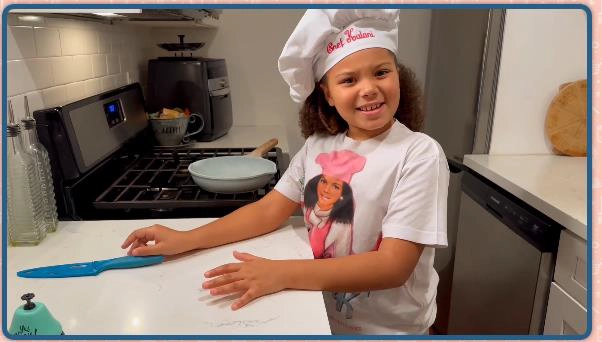
We want to make your transition to lifestyle learning as seamless and joyful as possible. That is why we feature incredible creators who bring learning to life naturally. One of our absolute favorites is Kalani Jules affectionately known as Chef K.
Chef K shares vibrant recipes highlighting healthy eating habits that are incredibly easy to follow. Watching her create a meal is an excellent way for families to find inspiration to work together in the kitchen.
You can simply pull up this cooking lesson with Chef K (be sure to have Playlist open) and let her guide your child through the steps of creating something nutritious and delicious. Because the instructions are visual and clearly demonstrated children feel empowered to take the lead. You can pause the video while you measure ingredients together to discuss the fractions involved and then hit play to see what Chef K does next. You get to be a fellow explorer with your child!
Doubling and Halving for Practical Multiplication
Recipes are rarely the perfect size for every occasion. Sometimes you are baking for a neighborhood gathering and need to double the batch. Other times you only want a few cookies for a quiet afternoon and need to cut the recipe in half. This is where kitchen math introduces multiplication and division in a purely practical and necessary way.
Print out a simple cookie recipe or pull one up from Chef K. Ask your child to help you rewrite it for a double batch. If the recipe calls for two cups of flour what is two times two? If it calls for one half teaspoon of baking soda what is double that amount?
This exercise challenges them to manipulate fractions and whole numbers mentally. It also shows them the true utility of math. We are not just multiplying numbers for the sake of a homeschool math curriculum requirement. We are multiplying so we have enough food to share with our friends.
Halving a recipe can be even trickier and much more engaging. What is half of one third cup? This might require them to convert to tablespoons. Did you know there are sixteen tablespoons in a standard cup? This opens up a whole new layer of conversion math that is often entirely skipped or rushed through in a standard homeschool math curriculum.
Try these conversation starters to spark problem solving:
- “If we invite the cousins over we will need twice as many muffins. Can you help me figure out how much flour we need to make that happen?”
- “We only have two eggs left but the recipe calls for four. How can we shrink all the other ingredients to make this work?”
- “This recipe makes twelve cookies but we want twenty four. What do we need to do to our measurements?”
This kind of applied thinking builds incredible resilience. It teaches kids that math is a tool they can wield to solve real problems in their world.
The Chemistry of Baking and Ratios
Baking is not just a math lesson. It is a completely edible chemistry experiment. The relationship between different ingredients is called a ratio. This is a concept that usually appears much later in a traditional homeschool math curriculum but you can introduce it naturally right now in the kitchen.
Bread making is a perfect example of this concept. The ratio of flour to water determines if you get a stiff sandwich loaf or a bubbly artisan crust. Discuss with your child how much water we are adding compared to the amount of flour. If you add too much water the dough becomes a sticky mess. If you add too much flour it becomes a dry brick.
You can set up a small experiment. Make a tiny batch of dough with an equal ratio of water and flour. Make another batch with a two to one ratio of flour to water. Bake them both and compare the textures. You are analyzing data and variables just like scientists in a laboratory all while making lunch.
Embracing the Mess and the Mistakes
Let us be completely honest with each other. Baking with kids is going to be messy. Flour will absolutely end up on the floor. Eggshells will find their way into the mixing bowl. The entire process will take twice as long as doing it yourself in silence.
This is perfectly okay. In fact it is completely necessary for deep learning.
A sterile environment often discourages mistakes. Kids become terrified of getting the wrong answer on their worksheets. In the kitchen a mistake is just part of the creative process. If you spill the milk you grab a towel and wipe it up. If the cookies burn on the edges you scrape off the dark parts and eat them anyway.
Model patience and grace for your child. When you make a mistake laugh out loud about it. Show them that you are learning and growing too. This emotional safety allows them to take big risks with their learning. They will be much more willing to guess an answer or try a difficult problem in their homeschool math curriculum later if they know that getting it wrong is not a failure but a stepping stone.
If you are transitioning away from a traditional public school mindset this natural style of living and learning is often called deschooling. It is the gentle process of relaxing your expectations of what education must look like. For a wonderful deeper dive into this concept you can read 10 tips to help you deschool from Unschooling Mom2Mom. This article is a fantastic resource because it validates the intense need to slow down and prioritize emotional connection over checking boxes which is exactly what you are doing when you bake together.
Connection Over Curriculum
At the end of the day the most valuable part of this entire experience is not the math. It is the uninterrupted time spent with you. Homeschooling gives your family the beautiful gift of time. You have the freedom to slow down and let learning happen at a pace that honors your child.
Do not stress if your child does not grasp equivalent fractions in one single afternoon. Do not worry if you abandon your formal homeschool math curriculum for an entire week just to bake and play and explore. You are building a rock solid foundation of trust and lifelong curiosity.
You are showing them that learning is a vibrant lifestyle rather than a daily chore. You are nurturing their spirit alongside their mind. And the best part is that you get to sit down and eat warm cookies together at the end. That is a massive win for everyone involved.
So put on the aprons. Turn on some uplifting music. Get the flour out of the pantry. Let learning unfold naturally and joyfully. You have absolutely got this.
If you are looking for a supportive community and flexible tools that completely align with this gentle approach we would love to welcome you to LearningHub.com. We believe that every family deserves access to high quality resources that inspire rather than dictate.
Ready to make learning deliciously fun?
Create your free LearningHub.com account today and unlock thousands of interactive lessons, hands on playlists featuring incredible guides like Chef K, and gentle supportive tools to help you build a hands on homeschool math curriculum your kids will love.
References
Martino, L. (n.d.). Joyful Learning: The Key Elements That Make All the Difference. Retrieved from https://lesliemartino.com/joyful-learning-the-key-elements-that-make-all-the-difference/
Unschooling Mom2Mom. (n.d.). 10 tips to help you deschool. Retrieved from https://www.unschoolingmom2mom.com/10-tips-to-help-you-deschool

