
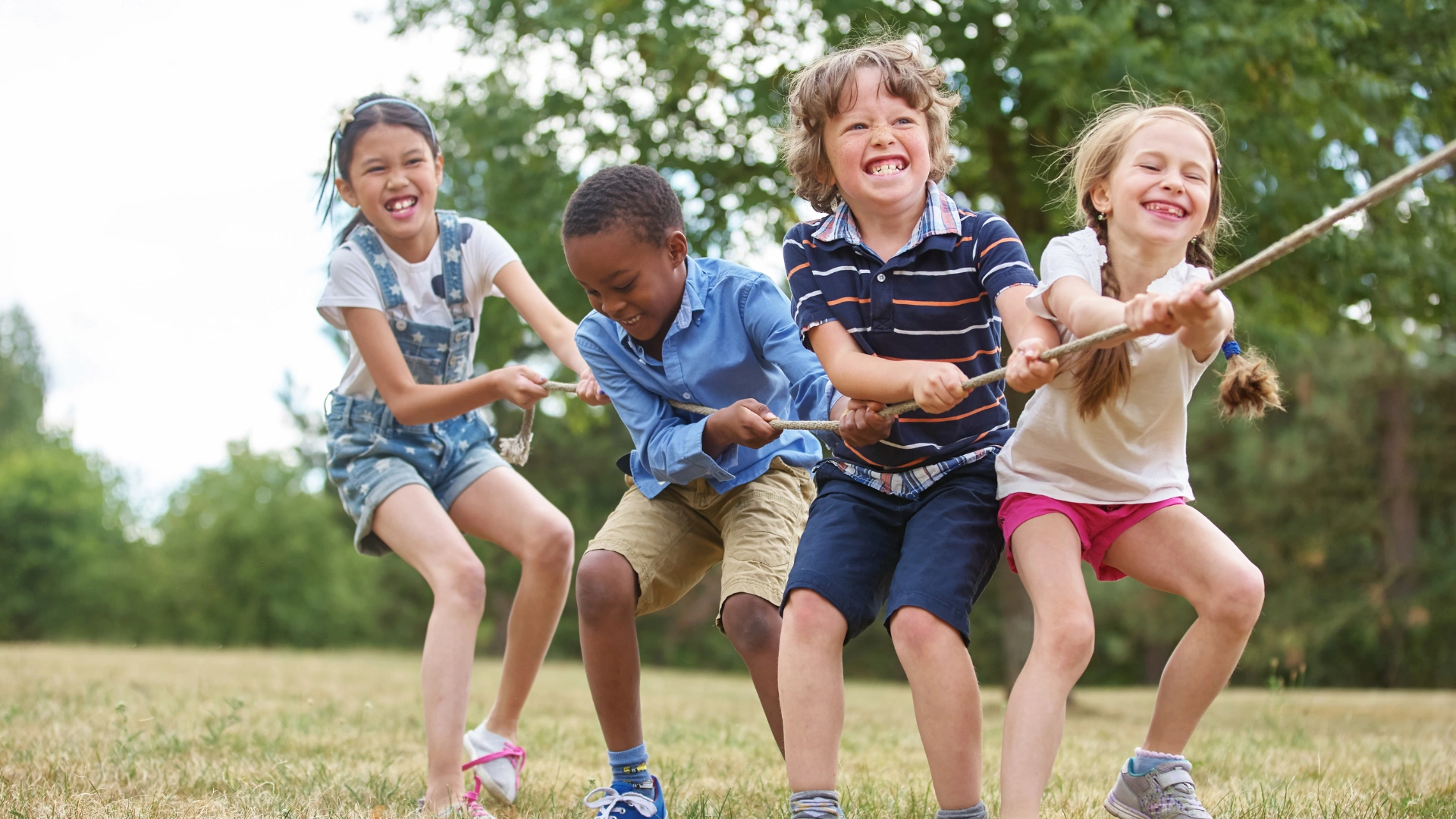
If you’ve chosen to homeschool, you’ve almost certainly heard that question. You know the one: “But what about homeschool socialization?”
It’s often asked with a mixture of concern and skepticism, suggesting that your child will grow up awkward, isolated, and unable to interact with the world. This outdated idea is one of the biggest myths in home education.
The truth is, homeschool socialization is not a deficiency to be fixed; it’s an opportunity to be embraced. When you homeschool, you move beyond the age-segregated, forced interactions of a classroom and instead facilitate real, meaningful connections with people of all ages, backgrounds, and life stages.
This article is your guide to understanding the true benefits, busting the old myths, and finding the amazing homeschool community that is waiting for your family.
Busting the Myth: What "Socialization" Really Means
The worry about homeschool socialization stems from the false belief that being in a room with 25 same-age peers for eight hours a day is the best way to learn social skills.
Socializing vs. Social Skills
- Socializing is the act of interacting with others. Homeschoolers have boundless opportunities for this in the real world at libraries, co-ops, gyms, and in their own neighborhoods.
- Social Skills describe the ability to initiate conversation, navigate conflict, collaborate, interact appropriately with people older and younger, and possess empathy. These skills are learned best through varied, purposeful, and self-directed interactions.
Homeschooling naturally encourages a richer social experience because:
- Age Diversity: Homeschoolers routinely interact with toddlers, teens, and adults, leading to better communication skills across generations. They learn how to converse with a librarian or a business owner, not just their peers.
- Self-Initiation: When a homeschooler joins a club or a co-op, they are there because they chose that interest. Their interactions are driven by shared passion, leading to deeper, more authentic friendships and collaboration.
- Conflict Resolution: Without constant adult supervision in an institutional setting, children learn to navigate minor conflicts themselves a crucial real-world skill.
Bold Takeaway: True social competence comes from interacting with the real world, not just a mandated group of same-age peers.
Part 2: Finding Your Homeschool Community
The key to great homeschool socialization is finding the right people and places for your family to plug into. You don’t have to carry the load alone; a thriving homeschool community is your greatest resource.
1. The Homeschool Co-op: Focused Connection
A homeschool co-op (cooperative) is a powerful, organized way to inject specialized learning and social time into your week.
- What it is: A group of families who meet regularly (often weekly) to share teaching responsibilities. Parents volunteer to teach classes based on their skills or passions (e.g., one parent teaches history, another leads a science lab, and another runs an improv class).
- Benefits:
- Shared Expertise: Your children benefit from a wider range of parental talents and interests.
- Built-in Friendships: Both children and parents make dedicated friends based on consistency and shared effort.
- Structure without Pressure: The learning is communal and collaborative, offering a pleasant structure to the week without the rigidity of a traditional school.
To explore this option more, read our deep dive on Finding Your Village: The Amazing Homeschool Co-op Benefits You Need to Know.
2. General Homeschool Groups Near Me: Daily Opportunities
These are the informal hubs where daily interactions happen. They are typically organized locally and are easy to jump into.
- Park Days: Search: “homeschool groups near me”. These groups organize weekly park days where families gather and let kids play freely while parents chat and connect. This low-pressure setting is fantastic for spontaneous, joyful connection.
- Field Trip Groups: Look for groups that organize educational outings to museums, historical sites, farms, or nature preserves. Learning alongside friends is always more memorable.
- Activity Clubs: Seek out groups focused on specific interests: Book clubs, sports leagues, or coding clubs. Interest-led groups provide the most organic form of homeschool socialization.
3. Leveraging Outside Resources
Don’t forget the rich social tapestry outside of dedicated homeschool circles.
- Community Centers & Libraries: Sign your child up for a community art class, a youth theater group, or a specialized sports league. Children can interact with people from diverse educational backgrounds and pursue a skill they enjoy.
- Service & Mentorship: Encourage volunteering at a local charity, animal shelter, or community garden. These interactions expose them to adults in leadership roles and teach them responsibility and empathy, the highest forms of social skill.
Part 3: Practical Tips for Integrating Social Life
Effective homeschool socialization may require a shift in your homeschool planning. Consider intentionally setting aside time for energy and connection.
1. Build “Social Blocks” into Your Week
Just as you schedule a Focus Block for math, schedule time for connecting with the wider world.
- The Power of Midday: Many groups meet mid-morning or mid-afternoon, when most children in traditional school are occupied. Use this quiet time to your advantage.
- Flexible Scheduling: If Tuesday is Co-op Day, don’t try to cram a full schedule of academics into the remaining part of the day. Treat that social day as a complete educational unit, knowing that the skills learned there (collaboration, public speaking, negotiation) are invaluable.
- Integrate Technology: Sometimes, the best homeschool community is online. Use a platform like LearningHub.com to connect with other learners through shared interactive projects or to pursue an interest that doesn’t have a local group, such as advanced coding or ancient history.
2. Navigating Awkward Moments (The “Bubble” Myth)
You might encounter a few awkward moments, kids taking a while to warm up, or misreading a social cue. Remember: this is normal for all children, regardless of where they learn.
- Allow for Quiet Observation: Socializing doesn’t always mean talking. Sometimes, a child needs time to observe a group dynamic before jumping in. Respect their need for space.
- Facilitate, Don’t Force: Instead of pushing them into a conversation, suggest a shared activity. “Why don’t you ask if anyone wants to help you build that fort?” Shared goals are the easiest bridge to friendship.
- Model Social Grace: Your children are watching you interact with cashiers, neighbors, and co-op friends. Model the calm, empathetic, and respectful communication you want them to practice.
For more information on the outcomes of homeschool socialization compared to other learning environments, you can look into the long-term studies offered by the Journal of School Psychology, which often cover the high levels of emotional and social adjustment found in homeschool graduates.
Final Encouragement: Trust Your Path
Questions about “socialization” often come from a place of fear. Your calm, confident answer should be that your child is learning real social skills in real situations with real people. You have given your child the gift of a childhood connected to the wider world and the ability to choose their own friends and communities based on shared passion.
Ready to find tools that support your flexible, community-focused approach to learning?
Create your free LearningHub.com account today and unlock a treasure trove of interactive lessons, community-friendly project ideas, and flexible resources that you can easily integrate into your homeschool co-op or homeschool group strengthening your child’s learning and connection every day.
References
Journal of School Psychology. (n.d.). Impact of Homeschooling on Social and Emotional Adjustment. Retrieved from https://onlinelibrary.wiley.com/doi/abs/10.1002/9781118926895.ch6?msockid=2cf2aa4454ab6adc3cc4bf0855326b4f
National Home Education Research Institute (NHERI). (n.d.). Academic and Social Outcomes of Homeschool Graduates. Retrieved from https://www.nheri.org/

