
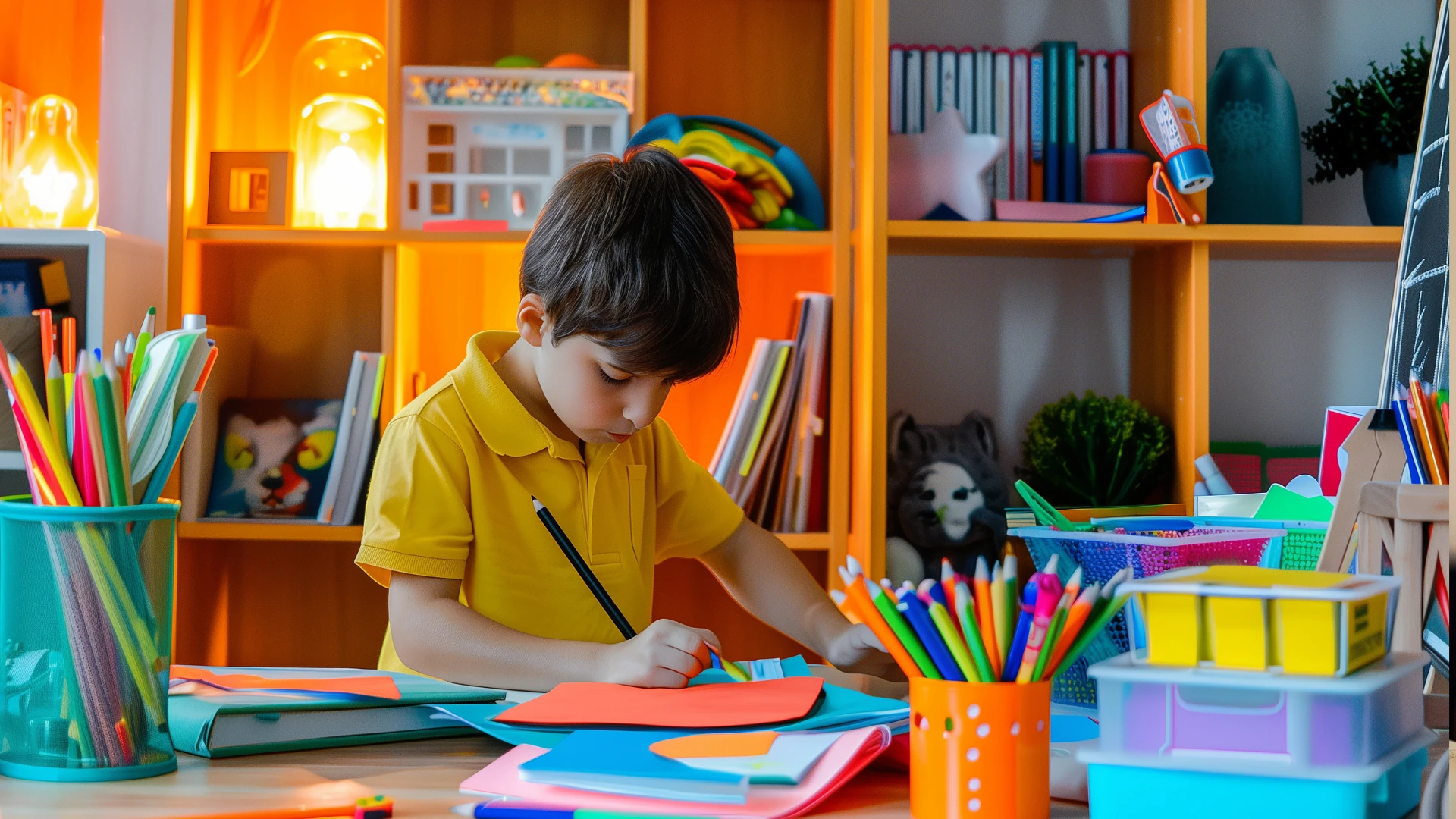
Let’s be honest: one of the toughest parts of homeschooling life isn’t teaching; it’s the never-ending avalanche of books, art supplies, half-finished projects, and papers. If the clutter is causing friction, it’s time to tackle your homeschool organization with a clear head and a flexible plan.
Good organization isn’t about being perfectly neat; it’s about creating systems that make your life easier and encourage your kids to be more independent learners. When children know exactly where to find their scissors, their library books, or their math materials, they stop asking you for help with every tiny task. That’s a win for independence and a major win for your peace of mind!
Here are simple, parent-friendly hacks to manage your materials, streamline your planning, and keep your space functional and inviting.
The Great Declutter: Organizing Learning Supplies
Before you buy a single bin or label maker, you need to simplify what you already have. Less stuff means less organizing.
Focus on Access, Not Filing
Your home is not a public library or a school supply closet. Your goal is immediate, easy access to high-use items, and smart storage for the rest.
- The “Yes” Shelf or Cart: Designate one shelf, cubby, or rolling cart that holds everyday essentials like pencils, glue sticks, crayons, plain paper, and journals. Everything on this shelf is available without asking. This is the single most powerful hack for encouraging spontaneous learning.
- Create Project Zones, Not Subject Zones: Instead of a dedicated bin for “Math” and one for “Science,” create bins for the type of activity.
| Category | Example Contents |
| Building & Engineering | LEGOs, K’nex, basic tools |
| Art Exploration | Paints, special papers, clay |
| Reference & Reading | Atlases, dictionaries, non-fiction books |
- Establish a Permanent “Inbox” for Finished Work: Have one simple box or tray on your desk. When your child finishes a piece of writing, a drawing, or a math sheet they want you to check, it goes in the inbox. This keeps loose papers off the counters and gives you one place to look when you have a moment to review.
Taming the Book Overload
Books are vital, but a disorganized pile of books is just visual noise.
- The Library Basket: If you use your local library, designate a special bag or basket that only holds library books. When it’s not in use, it should sit by the door, ready for the next library trip. This is a game-changer for avoiding late fees and frantic searches!
- The Current Read Stand: Use a small book stand or display rack for the books you are actively reading aloud or those your children are currently using for a project. When the project is over, the books go back to a main shelf.
Bold Takeaway: Organize your supplies for flow and independence. If a system requires too much effort from you, it won’t last.
Streamlining Your Planning and Records
Homeschool planning doesn’t require an enormous binder, but it does require a simple way to track what you’ve done, what you need to do, and which resources you are using. This is the organizational step that prevents the dreaded “falling behind” feeling.
The Low-Tech, High-Impact Planner
Ditch the pre-printed, hyper-detailed planners and create a system that serves your flexible approach.
- The Weekly Whiteboard: A small whiteboard or large calendar visible to everyone is the perfect central hub. Write down the anchors for the week (park days, co-op meetings, appointments) and the Focus Topics you intend to cover. Example Weekly Plan:
- Monday: Focus Work — Math
- Tuesday: Field Trip — Museum
- Wednesday: Creative Project — Painting
- The “Catch-Up” Column: On the whiteboard, dedicate a column to things that need to be followed up on, like “Finish volcano paper” or “Read Chapter 4 of nature book.” This prevents tasks from disappearing into the abyss and makes it easy to incorporate them into your flexible blocks.
Organizing Your Homeschool Curriculum
Whether you piece together your homeschool curriculum or use a full-package resource, you need a smart way to store materials without creating endless stacks.
- Use Digital for Everything Possible: Utilize platforms like LearningHub.com to store assignments, keep track of interactive lessons, and hold playlists of content built around your child’s specific interests. This eliminates countless papers and books.
- The Box Method for Physical Materials: For physical workbooks or loose curriculum guides, assign one simple, labeled file box or magazine holder per child. This holds their core learning materials for the year, keeping them contained and easily accessible without dominating a whole shelf.
- The 90-Day Purge: At the end of every quarter (roughly every three months), go through the completed work and decide what to keep for records and what can be recycled. Don’t wait until the end of the year when the pile is enormous!
Bold Takeaway: Your best planning tool is one you can quickly glance at and easily change. Flexibility is a feature, not a bug, of a good schedule.
Organizing for Independence: The Power of Self-Serve Systems
The true mark of excellent homeschool organization is how well the system works when you are busy. You want your children to be able to start, continue, and finish their work with minimal input from you.
Establishing Learning Stations
You don’t need a dedicated classroom, but you do need defined spaces for specific tasks.
- The Writing Nook: Create a comfortable corner with a soft seat, good light, and a dedicated journal and pen holder. This makes writing feel like a cozy, inviting activity rather than a mandated chore.
- The Project Table: If possible, designate a table (even a small card table) where messy projects can stay out for a few days. This respects the continuity of large projects, encouraging deep, sustained engagement rather than rush-and-clean.
- The Library Hub: Keep the main book-browsing area clear and attractive. Make sure the most intriguing non-fiction and reference books are at eye level.
Empowering Your Child
- The Daily Checklist: Instead of giving verbal instructions, create a simple, reusable checklist (on a dry-erase board or laminated sheet) listing their Focus Block tasks. Example Activities:
- Math – page 7
- Writing – “Write about last night’s owl sound”
- Reading – Read-Aloud BookWhen they finish an item, they check it off. This transfers ownership of the tasks from you to them.
- Ownership of Their Space: Let your children organize their own drawers and supply bins, even if it’s not exactly how you would do it. The system they create is the one they will use. Empowering them to organize their own things is a huge part of practical life skills.
For more in-depth research on how a well-structured and organized learning environment can reduce stress for the whole family, you can check out resources on Mindful Organization and Educational Environments, which often connect physical order to emotional well-being.
Final Thoughts on Organization and Peace
Remember, homeschool organization isn’t about being perfect; it’s about being functional. If your current system is causing stress, simplify it. Get rid of anything you haven’t touched in six months, and only keep materials that genuinely inspire joy and curiosity. The fewer things you have to manage, the more time you have for connection and joyful learning.
Ready to spend more time learning and less time organizing? Create your free LearningHub.com account and access thousands of interactive lessons, curated playlists, and digital planning tools that help your homeschool flow better—without the clutter.
References
The Homeschool Mom. (n.d.). Homeschool Organization Strategies. Retrieved from https://www.thehomeschoolmom.com/homeschool-help/getting-organized/
Wissick, D. (n.d.). How to Teach Kids to be Organized – From Toddler to Teen. Retrieved from https://prettysimplemom.com/how-to-teach-kids-to-be-organized/

